
Sometimes, our biggest mistakes do not happen because we lack intelligence. They happen because we
become too convinced that we are right.
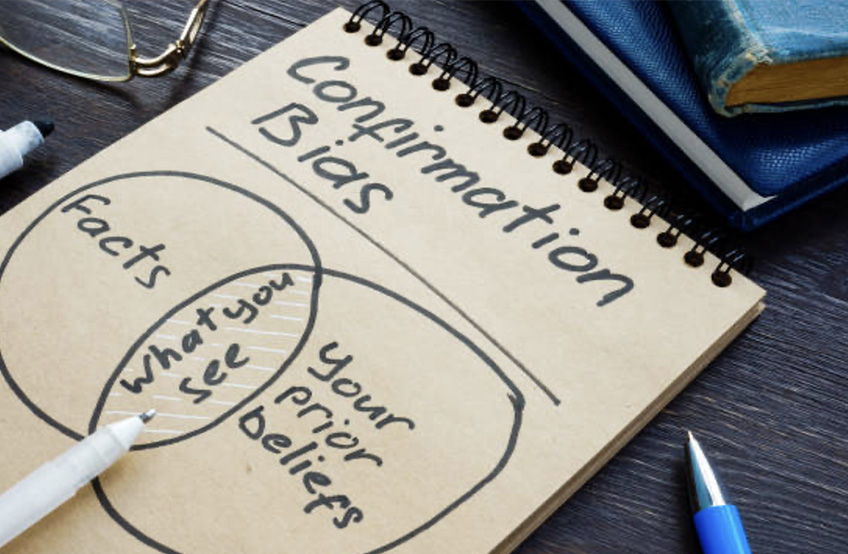
This is where confirmation bias quietly enters our thinking. It is our tendency to look for, notice,
remember, and give more importance to information that supports what we already believe, while
overlooking information that challenges it.
Once we form an opinion, we often stop asking, “What if I am wrong?” Instead, we unconsciously ask,
“What proves that I am right?”
And that small shift can lead to very poor judgement.
Think about someone who is convinced that a particular investment is going to make them rich. They
read positive reviews, listen carefully to people who agree with them, notice stories of others making
money, and dismiss warnings as negativity or fear. Even when there are clear signs that the investment
is risky, they may tell themselves, “It will work out.”
The problem is not that they did not have information. The problem is that they filtered the information
through what they already wanted to believe.
The same happens in relationships.
We may decide that someone is trustworthy and then interpret every positive behaviour as proof of
their character while explaining away the red flags. Or we may decide that someone is selfish, and
every small mistake they make becomes further evidence that we were right.Over time, our belief becomes stronger—not necessarily because the evidence became stronger, but
because we selectively collected evidence that supported it.
This can become expensive.
Confirmation bias can influence financial decisions, business partnerships, career choices, purchases,
relationships, and even major life decisions. We may invest more money into something simply
because we have already invested so much emotionally or financially. We may continue trusting
someone because accepting that we misjudged them is painful. We may reject advice because it does
not fit the story we have created in our minds.
And when reality finally becomes impossible to ignore, regret arrives.
We say:
“Why didn’t I see the signs?” “Everyone warned me.” “I knew something was wrong.” “How could I
have been so foolish?”
But perhaps the better question is not “Why didn’t I see it?” but “What was I unwilling to see?”
Good judgement does not mean always making the right decision. It means being willing to examine
our assumptions before making the decision.
Before committing to an important choice, we can ask ourselves:
What evidence supports my belief? What evidence contradicts it? Am I looking for facts—or just
reassurance? What would I need to see to change my mind? If someone I trusted made this decision,
what would I advise them?
Sometimes, the wisest thing we can do is deliberately look for evidence that proves us wrong.
Because being right feels good in the moment. But being willing to question ourselves can save us
from much bigger mistakes later.
Confirmation bias reminds us of something important: our mind is not always searching for the truth.
Sometimes, it is simply searching for confirmation.
And learning to notice that difference can protect not only our money, but also our relationships,
choices, and peace of mind.